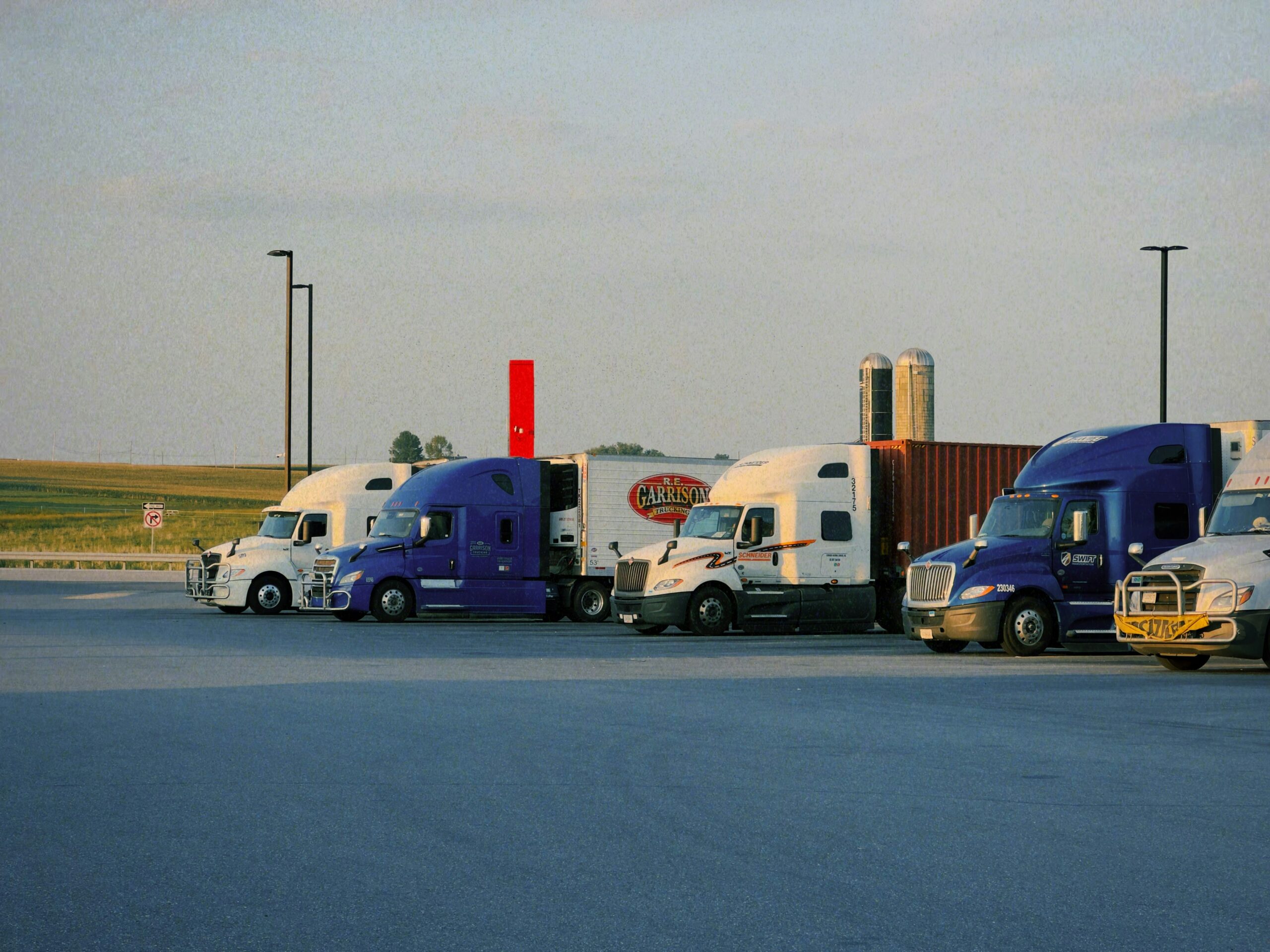
The freight boom of the Sun Belt has enormous Texas`s metropolitan area so far, it has pushed Dallas–Fort Worth to be the only DFW logistics hub in the entire country. With this Sun Belt freight boom, the regions perfect infrastructure and position are the reasons behind the incredible increase in Dallas Fort Worth e-commerce activity. Indeed the Sun Belt freight boom has facilitated the DFW logistics hub, while Dallas Fort Worth e-commerce platforms benefit from a more rapid delivery time and new channels. The dual growth of freight and online retail highlights how the Sun Belt freight boom along with the DFW logistics hub in combination with e-commerce in Dallas Fort Worth are altering the national distribution and retail sectors.
What Made the Sun Belt Freight Boom Possible?
Over the previous 20 years, the population of the U.S. has moved to the south and the west, with the leading group being the Sun Belt states in domestic migration. Texas has become not just a place to be for companies attracted to supportive policies, low-cost housing, and high-skilled labor but also an epicenter. Dallas`s business-friendly atmosphere with diminished regulation and lower taxes has been the key to attracting logistics giants and distribution centers . As more businesses moved to or broades their activities to this area, freight volumes escalated and this investor youthful wing of the industry turned into reality.
The main factors for the Sun Belt freight boom are:
- Population growth: DFW got more than 1.2 million new residents in the last ten years, which increased both consumer demand and available workforce (cbre.com)
- Corporate relocations: 36 % of the 489 corporate relocations were in DFW, with Texas always ranking high for these
- Proximity: Central location allows carriers to efficiently serve both coasts, Mexico, and the heartland
DFW Logistics Hub: The Best of the Best
Currently, Dallas–Fort Worth is home to over 613 million square feet of distribution and warehouse space, more than any other U.S. metropolis, and was also No. 1 in terms of new industrial construction in 2023 . See our page for more info. Such a large infrastructure establishes the base of the region’s justification to be the No. 1 DFW logistics hub:
- Sun Belt investment in real estate: Developers managed to get land storage facilities all along I-20, I-35, and I-45 due to a rising market that reached unprecedented levels
- Interstate network: A twissel of highways connects DFW to nearly all major U.S. markets at a two-day scheduling period
- Class I rail access: Union Pacific, BNSF, and Kansas City Southern converge here, fueling intermodal efficiency
With the significant concentration of the logistics assets in one area, DFW supplies the fast and trustworthy freight transportation which is in the center of the Sun Belt freight boom.

Ports and Intermodal Connectivity
Although Dallas–Fort Worth is located inland, the Texas bay systems create direct international ships through the region:
- The Port of Houston is the gateway to the Gulf Coast, controls 67 % of the U.S. container traffic, and thus adds freight to DFW’s distribution parks.
- Port Beaumont and Port Corpus Christi feature prominently in the top 10 U.S. ports by cargo volume.
- Intermodal rail: DFW is third among the states for intermodal rail traffic, as it is a crossroads for freight transportation among ship, rail, and truck.
This shun belt of sea, rail, and road create such a logistical trifecta that powers the region’s continuous growth in freight.
Air Cargo: Fully Loaded with High-Value and Time-Sensitive Freight
Airports play an important role in the DFW logistic hub particularly for high-value and perishable goods:
- DFW International Airport is the largest airport in Texas and the fourth-largest airport in the US and the most tonnage by air cargo —the airport handles 600,000 tons a year.
- Dallas Love Field, Austin-Bergstrom, and San Antonio International strengthen your air-cargo network even further in Texas.
- Priority lanes and dedicated air cargo terminals are designed to ease ground delays and improve turnover.
By integrating air cargo with road and rail, the freight boom now includes all transportation means and thereby fulfills the requirements of modern supply chains.

E-Commerce Surge: Dallas Fort Worth E-Commerce Overdrive
The growth of the e-commerce sector came hand in hand with the shift in DFW logistics. The very moment that digital retail started to bloom, logistics fulfilled the need for them:
- DFW housed 10,056 e-commerce companies in 2016, recruiting 384,000 people and thus generating $20.4 billion in payroll which makes it the best area for retailing D- Magazine
- Class A and A+ fulfillment center investments went up 15 percent in 2023 just to accommodate the demand for same-day deliveries
- Retailers have benefited from DFW’s central location, which has made their transit time shorter by as much as 24 hours compared to the coastal distribution
The close connection between the Sun Belt freight boom, the DFW logistics hub and Dallas Fort Worth e-commerce is the good freight network boosting online retailing.
Warehouse and Industrial Real Estate Surge
The freight boom made it the right time and the best area for industrial real estate development:
- 613 million sq ft existing stock, with 60.6 million sq ft under construction as of Q4 2023
- Even with record deliveries vacancy rates stayed beneath five percent which shows the strength of absorption
- Major projects like the 27,000 acres of Hillwood’s AllianceTexas and the 1.2 million-sq-ft campus of Southwire in Fort Worth highlight the scale of investment
Developers are still going after the land that is located near ports, rail yards, and highways. They know that proximity equals work effectiveness and cost-saving for shippers.
Workforce and Economic Impact
The logistics industry booming to the effect of rippling all over the economy:
- General freight trucking employs more than 140,000 people and the average wage is over $52,000 in Texas.
- In Dallas, logistics-related jobs went up by 3.7 % and in Fort Worth by 2.3 % in 2022, while the national average was lower
- The programs that train people in vocational skills and certification courses have expanded in order to fulfill the needs of the training and they make a solid base for the qualified drivers and technicians.
These trends of growth emphasize again why DFW is always on the radar of companies that seek feasible logistics solutions.
Challenges and Strategic Responses
Irrespective of its successful escapade, DFW still has to address some pressures:
- The maturity of its corridors and land scarcity in some areas might pressure developers to find alternatives in secondary markets
- The road congestion problem needs proper investment in roads expansion and smart-transport systems
- The missing workforce in both the CDL driver and warehouse operator areas wants new recruitment and training initiatives to reduce it.
The Public-Private partnership like the Texas Logistics Council and the municipal infrastructure bonds play a pivotal role in shaving off the Sun Belt freight boom and spur DFW to its competitive edges.
HMD Trucking: Synergetic in DFW’s Logistics Revolution
At HMD Trucking, we customize our operations to tap into DFW’s logistic strengths:
- Strategic hubs are being established near AllianceTexas and DFW Airport for quicker load dispatch
- Real-time tracking technologies from us bring trust, and reliability
- Cross-docking partnerships with local warehouses to streamline throughput
By cooperating with the development of the region’s infrastructure HMD Trucking has assured low-cost and on-time solutions that exploit a full DFW logistics hub and the carrying on of Sun Belt freight boom.
Looking Ahead: The Future of DFW Logistics
As far as e-commerce, the leap of manufacturing back to the country, and the diversification of supply channels keep influencing the Dallas–Fort Worth area is it is on its way to become the leading center in the USA:
- Automation in the warehouses and port terminals will push the throughput up a lot
- Green strategies─for example with electric vehicles, emissions observation─will delineate the operations
- Digital platforms will unite shippers, carriers, and warehouses in one for a total operation optimization.
These shifts of model will help DFW not just keep its No. 1 logistics ranking but will entrench it in the front set of the next-generation intermodal logistics and e-commerce interplay.
Conclusion
The Sun Belt freight boom has transformed and forever changed the logistics hub in the Dallas–Fort Worth area to become one of the most favorable places for DFW e-Commerce where sea, rail, and air-road connectivity serve as support structures. The data speak loud and clear about the area’s efficiency being 613 million sq ft of warehouse stock storage and 600,000 tons of air cargo with a yearly rate of increase . As long as businesses such as HMD Trucking use these resources for meeting the constant growing demands the DFW will be part of the heart of Sun Belt and the nation’s supply chain will be stronger. The freight boom continues, and Dallas–Fort Worth is ready to lead.